IR 64 is one of the well-known non-Basmati rice varieties in international agricultural trade. Recognised for its long, slender grain profile, good cooking quality, relatively early maturity and adaptability, it has established an important position in the rice-producing and rice-consuming markets of Asia and other parts of the world.
For rice farmers, millers, wholesalers, importers and international buyers, understanding IR 64 involves much more than identifying the finished white rice grain. Its background begins with agricultural research and breeding, continues through paddy cultivation and harvesting, and eventually reaches the stages of milling, grading, processing, packaging and international distribution.
IR 64 is commercially available in different forms, including raw white rice and parboiled rice. Buyers may also encounter different broken percentages, grain specifications and packing requirements depending on the intended market and end use.
This guide explains the variety from its agricultural origin to its commercial applications, providing a detailed understanding of IR 64 for people involved in the Indian and international rice industry.
1. What Is IR 64 Rice?
IR 64 is a high-yielding, semi-dwarf Indica rice variety developed by the International Rice Research Institute (IRRI), based in the Philippines.
It belongs to the non-Basmati category of rice and is known for its long, slender grain characteristics, good cooking quality and comparatively early maturity.
Unlike traditional aromatic Basmati varieties, IR 64 is generally non-aromatic and is primarily traded as a regular consumption rice variety. Its commercial importance comes from the combination of agricultural productivity, cooking characteristics and suitability for large-scale production and distribution.
The variety became particularly popular because it addressed an important challenge in rice cultivation: producing higher yields without sacrificing the eating quality expected by consumers.
IR 64 is also known as a successful agricultural research variety because it brought together several desirable characteristics, including grain quality, disease resistance, early maturity and milling performance.
It is important to understand that IR 64 is the name of a specific rice variety. Terms such as IR 64 Raw, IR 64 Parboiled, IR 64 5% Broken and IR 64 25% Broken describe its processing or commercial grade, rather than entirely different original varieties.
2. Origin and History: Where Did IR 64 Rice Come From?
The history of IR 64 begins at the International Rice Research Institute (IRRI), an agricultural research organisation established in the Philippines.
During the development of modern rice varieties, researchers were working to improve agricultural productivity while maintaining desirable grain and cooking characteristics. Earlier high-yielding varieties had helped increase rice production, but some did not provide the eating quality preferred by consumers.
IR 64 was developed as part of the effort to address this gap.
The variety was officially released in the Philippines in 1985. It was developed through selective breeding and field evaluation, combining desirable characteristics from its parent lines.
Its breeding pedigree is:
IR 5857-33-2-1 × IR 2061-465-1-5-5
The resulting variety offered a combination of high yield potential, relatively early maturity, improved grain quality and resistance to certain important rice pests and diseases.
Following its successful introduction in the Philippines, IR 64 was released in several other countries, including India, Indonesia, Vietnam, Bhutan, Cambodia and other rice-producing regions.
Its popularity expanded rapidly. Within approximately two decades of its release, IR 64 was cultivated across more than 10 million hectares worldwide, earning recognition as one of the major rice varieties developed through international agricultural research.
The variety also became an important parent in subsequent rice-breeding programmes, contributing to the development and study of other rice lines.
3. IR 64 Rice in India: Major Cultivation Regions
Although IR 64 was developed in the Philippines, it was subsequently introduced into India and became part of the country's non-Basmati rice cultivation landscape.
India has several rice-producing regions, and the cultivation of IR 64 is associated with irrigated rice-growing areas. However, it would be inaccurate to identify one Indian state as the single dominant producer of IR 64 without reliable variety-specific production statistics.
The ICAR Rice-GARUD database lists the original IR 64 variety as suitable for irrigated areas across India.
Its cultivation and availability can vary according to regional seed adoption, water availability, agricultural practices, milling infrastructure and local market demand.
Some important rice-producing regions relevant to the wider IR 64 supply chain include:
Andhra Pradesh and Telangana: These states have established rice cultivation and milling industries. Their agricultural infrastructure makes them relevant to the sourcing and processing of non-Basmati rice.
Chhattisgarh: An important rice-producing state with a substantial paddy cultivation and procurement ecosystem.
Odisha: Rice is a major agricultural crop, with cultivation across several districts and different production conditions.
West Bengal: One of India's major rice-producing regions, with multiple rice-growing seasons and a large domestic rice market.
Tamil Nadu: An established rice-producing state with irrigated cultivation and a developed milling sector.
These are broader rice-producing regions, not a definitive ranking of IR 64 cultivation by state. Buyers looking for IR 64 should confirm the actual variety, origin, milling location and available lot with the supplier.
Another distinction worth noting is that IR 64-Sub1 and IR 64-DRT I are improved derivatives or related breeding lines, developed for particular agricultural conditions. They should not automatically be treated as identical to the original IR 64 variety.
4. Understanding IR 64 Paddy: The Rice Before Milling
Before IR 64 becomes the white rice supplied to wholesalers, distributors and international buyers, it passes through the agricultural stage as paddy.
Paddy is the harvested rice crop with its outer husk still attached. It contains the rice kernel, which is protected by the husk and surrounding bran layers.
Understanding paddy quality is important because the condition of the harvested crop can influence milling recovery, grain appearance, breakage and the quality of the finished rice.
IR 64 is a semi-dwarf rice variety with relatively early maturity. The ICAR rice variety database records a maturity period of approximately 115–120 days under the listed cultivation conditions.
The actual crop duration can vary with climate, planting date, water availability, soil conditions and agricultural management.
How IR 64 paddy is cultivated
The cultivation process generally begins with selecting suitable quality seeds and preparing the field.
Farmers may use nursery transplantation or other locally recommended establishment methods depending on the region and cultivation system.
The crop requires appropriate water management, nutrient application and weed control throughout its growth cycle. Paddy fields are monitored for pests and diseases, particularly during sensitive growth stages.
When the crop reaches maturity, the panicles develop and the grains become ready for harvesting. The harvested paddy is then threshed, cleaned and dried to prepare it for storage or milling.
What determines paddy quality?
The quality of harvested IR 64 paddy can be influenced by several factors:
Grain maturity at harvesting.
Moisture content after harvest.
Presence of immature or underdeveloped grains.
Field-level pest and disease damage.
Foreign matter and impurities.
Harvesting and threshing practices.
Drying conditions and storage management.
Proper drying is particularly important. Excessively high moisture can increase the risk of deterioration during storage, while uneven drying and improper handling can contribute to grain cracking and breakage during milling.
For millers, purchasing good-quality paddy is one of the first steps towards producing consistent finished rice.
5. Physical Characteristics and Grain Appearance of IR 64
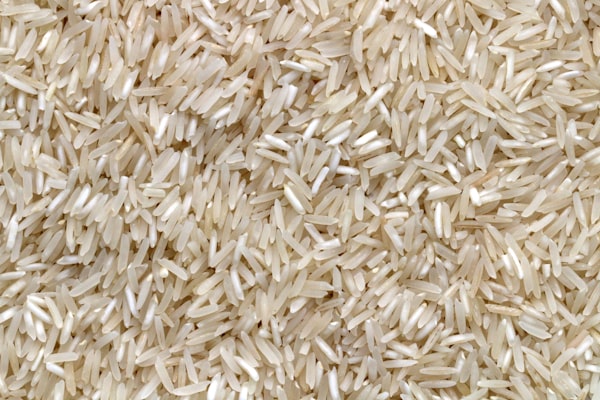
IR 64 is generally recognised as a long, slender, non-Basmati rice variety.
Its appearance and cooking characteristics distinguish it from several bold-grain and aromatic rice varieties.
The original variety is known for:
Long and slender grain characteristics.
White milled rice appearance.
Generally neutral or non-aromatic characteristics.
Good cooking and eating quality.
Intermediate amylose content.
Good head-rice recovery potential under suitable milling conditions.
Its grain quality was one of the major reasons behind its international popularity.
The original IR 64 variety has been studied extensively for its intermediate amylose content, soft gel consistency and intermediate gelatinisation temperature. These properties contribute to its desirable cooking characteristics.
Does IR 64 have the same grain length in every shipment?
No. Commercial grain measurements can differ depending on the particular lot, growing conditions, processing and measurement method.
Exporters and suppliers commonly advertise IR 64 with average milled grain lengths in the approximate range of 6.0–6.5 mm, although the actual measurement should be verified for the specific consignment.
Buyers should not rely only on the variety name when purchasing rice. They should request a representative sample and a written specification sheet before confirming a commercial order.
6. Commercial Specifications of IR 64 Rice
Commercial specifications are among the most important considerations in the international rice trade.
Unlike the agricultural description of the original variety, export specifications define the actual quality and condition of the rice being supplied.
IR 64 is available in several grades according to broken percentage, moisture content, processing method, grain appearance, purity and buyer requirements.
The following table provides an illustrative commercial specification framework. These are indicative trading parameters, not a single official specification applicable to every IR 64 shipment.
| Parameter | Typical commercial description |
|---|---|
| Rice variety | IR 64 |
| Rice category | Non-Basmati |
| Grain type | Long, slender |
| Grain length | Approximately 6.0–6.5 mm |
| Aroma | Generally non-aromatic |
| Processing | Raw or parboiled |
| Broken percentage | 5%, 10%, 15%, 20%, 25% or as agreed |
| Moisture | Commonly maximum 14% |
| Foreign matter | As per agreed contract |
| Damaged/discoloured grains | As per agreed contract |
| Purity | As per agreed contract |
| Sortex cleaning | Available according to grade and buyer requirement |
| Packing | PP, non-woven, BOPP or other agreed packaging |
Actual specifications must be confirmed against the supplier's lot-specific quality report and the buyer's destination requirements.
Understanding broken percentages
Broken percentage is one of the most important commercial grading factors in IR 64 rice.
It indicates the proportion of broken rice grains in a particular consignment, according to the agreed grading and testing method.
For example:
IR 64 5% Broken: A commercial grade with a maximum agreed broken-grain proportion of 5%.
IR 64 10% Broken: A grade allowing a higher proportion of broken grains.
IR 64 15% Broken: A grade commonly considered by buyers looking for a balance between price and grain condition.
IR 64 20% Broken: A grade with a higher broken-grain allowance.
IR 64 25% Broken: A grade that may be suitable for markets and applications where the buyer accepts a higher broken percentage in exchange for a different price point.
The broken percentage should always be understood in the context of the agreed contract. A 5% broken specification does not mean that every other quality parameter is automatically guaranteed.
7. Different Processing Forms of IR 64 Rice
IR 64 is commercially processed into different forms depending on buyer preferences and the intended application.
The two major categories are raw white rice and parboiled rice.
IR 64 Raw Rice
Raw rice is produced by cleaning and milling harvested paddy without first carrying out the parboiling process.
The husk is removed, and the rice is milled to obtain the required level of whiteness and finish.
IR 64 Raw Rice is used in everyday cooking, retail distribution, wholesale supply and institutional food preparation.
Its cooking characteristics and relatively neutral flavour make it suitable for a variety of rice-based dishes.
IR 64 Parboiled Rice
Parboiled rice is produced through a controlled process in which paddy is soaked, heated or steamed, and dried before milling.
The treatment changes the physical structure of the grain and influences its cooking characteristics and milling behaviour.
Parboiling can improve head-rice recovery and help reduce grain breakage during milling when carried out correctly.
IR 64 Parboiled Rice is commercially relevant in several international markets, particularly where consumers prefer the texture and cooking behaviour of parboiled rice.
The colour can vary depending on the parboiling process, resulting in different shades from creamy white to golden.
IR 64 Steam Rice
Some suppliers also offer steam-processed or steam-treated rice products under commercial descriptions.
The exact process and resulting characteristics can vary between mills. Buyers should therefore confirm whether the supplier is offering conventional raw rice, parboiled rice or a separately processed steam product.
These descriptions should not be assumed to be interchangeable.
8. How IR 64 Rice Is Processed in a Rice Mill
The transformation of IR 64 paddy into finished rice involves several stages.
After receiving paddy from farmers or procurement centres, the mill first checks the incoming material for moisture, impurities and overall condition.
The paddy is then cleaned to remove unwanted materials such as straw, dust, stones and other foreign matter.
In a conventional raw-rice processing line, the paddy proceeds to the husking section, where the outer husk is removed.
The resulting brown rice may contain a mixture of whole and broken kernels. It then passes through separation and milling stages to remove the bran layers and achieve the required milling degree.
The rice is subsequently graded according to grain size and broken percentage. Depending on the required commercial grade, it may also pass through colour-sorting equipment to remove discoloured grains and other visible defects.
The final product is weighed, packed and prepared for storage or dispatch.
For parboiled IR 64, the paddy undergoes the additional soaking, heating or steaming and drying stages before husking and milling.
Why is Sortex cleaning important?
Sortex or optical colour sorting is used to identify and remove grains that differ visually from the desired product.
It can help reduce the presence of discoloured grains, damaged kernels and certain visible impurities.
However, Sortex cleaning does not replace every quality-control procedure. Moisture testing, broken-grain analysis, foreign-matter inspection and representative sampling remain important parts of quality assurance.
9. What Is IR 64 Rice Mostly Used For?
IR 64 is a versatile non-Basmati variety used in household consumption, wholesale markets, food-service operations and industrial food applications.
Its commercial suitability depends on the grain grade, processing method, broken percentage and local consumer preferences.
Everyday household consumption
IR 64 is used as a regular staple rice in markets where consumers prefer affordable non-aromatic rice.
It can be prepared as plain steamed rice and served with vegetables, lentils, meat, fish and other everyday dishes.
Restaurants and catering businesses
Restaurants, hotels, institutional kitchens and catering companies purchase rice in bulk.
IR 64 can be used in standard meal preparation, particularly where the buyer prioritises consistent availability, commercial pricing and suitable cooking performance.
Wholesale and retail distribution
Rice wholesalers and distributors purchase different grades of IR 64 for resale through local markets, grocery shops and food distribution networks.
The choice of grade depends on consumer demand, retail price positioning and the quality expectations of the destination market.
International food markets
IR 64 is traded internationally as a non-Basmati rice variety.
Its raw and parboiled forms serve different consumer preferences across importing markets. Buyers may select a specific broken percentage and packing format according to local demand.
Food processing and institutional applications
Certain grades, particularly those with higher broken percentages, may be considered for processed food products, institutional kitchens and other commercial applications.
The suitability of a grade depends on the processing requirement and the buyer's product formulation.
10. IR 64 Rice in International Export Markets
India is an important supplier of non-Basmati rice to international markets, and IR 64 forms part of the wider range of rice varieties available to overseas buyers.
International demand is influenced by several factors, including price competitiveness, quality consistency, local consumption habits, import policies and logistics.
IR 64 is particularly relevant to buyers looking for non-aromatic rice in bulk quantities.
Different markets may prefer different forms of the product. Some importers focus on raw white rice, while others purchase parboiled varieties because of established consumer preferences.
The African market, for example, has demand for different grades of non-Basmati rice, including parboiled rice. Gulf and other regional markets also source Indian non-Basmati rice according to their individual requirements.
However, market demand should not be treated as identical across every country. Import regulations, product specifications, duties, packaging requirements and consumer preferences can differ significantly.
For exporters, understanding the destination market is as important as sourcing the right rice.
11. What Should Buyers Check Before Purchasing IR 64 Rice?
For international buyers, selecting IR 64 should involve a proper quality and commercial assessment.
A product name alone is not sufficient to establish whether a shipment meets the buyer's requirements.
Before confirming an order, buyers should review the following:
Product identity: Confirm that the product is the agreed IR 64 variety and clarify the processing form.
Broken percentage: Establish whether the requirement is 5%, 10%, 15%, 20%, 25% or another agreed grade.
Grain length: Confirm the expected average grain length and measurement method.
Moisture: Agree on the maximum permitted moisture content.
Purity and foreign matter: Define acceptable limits for impurities and admixture.
Damaged and discoloured grains: Confirm the permitted levels under the contract.
Processing quality: Clarify whether the rice is raw, parboiled, Sortex-cleaned or processed to another specification.
Packaging: Agree on bag material, bag weight, printing and labelling.
Inspection and documentation: Confirm the sampling, inspection, quality certificate and export documentation requirements.
Shipment terms: Clarify the delivery basis, shipment schedule, port, freight arrangements and payment conditions.
A representative pre-shipment sample and an agreed specification sheet can help reduce misunderstandings between suppliers and buyers.
12. Why IR 64 Remains Relevant to the Rice Industry
The continued importance of IR 64 comes from the combination of agricultural and commercial characteristics.
Its early maturity and yield potential have made it significant in rice cultivation. Its grain quality and cooking performance helped it gain acceptance among consumers. Its adaptability and widespread adoption have also made it an important variety in agricultural research and breeding programmes.
From a commercial perspective, IR 64 offers buyers different processing and grading options.
The availability of raw and parboiled forms, together with different broken percentages, allows the product to serve a range of market requirements.
For millers and exporters, the ability to source suitable paddy, maintain processing quality and supply consistent specifications remains essential.
The rice variety itself is only one part of the equation. The final commercial value depends on how effectively the product is cultivated, processed, graded, stored and delivered.
13. Frequently Asked Questions About IR 64 Rice
Is IR 64 Basmati or Non-Basmati rice?
IR 64 is a non-Basmati Indica rice variety. It is generally non-aromatic and is traded separately from traditional Basmati varieties.
Where did IR 64 rice originate?
IR 64 was developed by the International Rice Research Institute in the Philippines and officially released there in 1985.
What is the maturity period of IR 64 paddy?
The ICAR rice variety database records approximately 115–120 days for the original IR 64 variety under the listed cultivation conditions. Actual duration can vary with local conditions.
What is the grain length of IR 64 rice?
Commercial suppliers commonly offer IR 64 with average milled grain lengths around 6.0–6.5 mm. The actual measurement should be confirmed for each lot.
Is IR 64 available in raw and parboiled forms?
Yes. IR 64 is commercially available as raw white rice and parboiled rice, depending on the mill's processing facilities and buyer requirements.
What does IR 64 5% Broken mean?
It refers to a commercial grade in which the agreed broken-grain percentage is limited to a maximum of 5%, according to the contract's grading method.
Which Indian states grow IR 64?
The original IR 64 is listed by ICAR as suitable for irrigated areas across India. Cultivation and commercial availability vary by region. There is no single state that can be identified as its dominant producer from the national variety database.
What is the difference between IR 64 Raw and IR 64 Parboiled?
Raw rice is milled without parboiling the paddy first. Parboiled rice is produced by soaking and heating or steaming paddy before drying and milling. The processing method influences grain characteristics and cooking behaviour.
Is IR 64 suitable for export?
Yes. IR 64 is traded internationally as non-Basmati rice. Export suitability depends on the required specification, quality compliance, destination regulations and buyer requirements.
Conclusion: Understanding IR 64 from Paddy to International Trade
IR 64 is much more than a commercially traded non-Basmati rice variety. Its development represents an important achievement in international rice research, bringing together yield potential, relatively early maturity, disease resistance and desirable cooking quality.
From its development at IRRI and release in the Philippines in 1985 to its adoption in India and other rice-producing countries, IR 64 has become an established part of the global rice industry.
Understanding its agricultural background, paddy characteristics, processing methods, broken percentages and commercial applications helps farmers, millers, exporters and buyers make better-informed decisions.
For international buyers, the most important consideration is to match the right variety and processing form with the required quality specifications and destination-market needs.
For exporters, consistent sourcing, careful milling, accurate grading and dependable shipment execution remain central to building long-term relationships in the international rice trade.
About SM Rice Global Exports
SM Rice Global Exports is engaged in Indian rice sourcing and international supply, connecting buyers with Basmati and Non-Basmati rice varieties through a network of more than 200 connected mills.
We work with international buyers, importers, wholesalers and distributors to support bulk rice sourcing requirements and global trade enquiries.
For IR 64 rice and other Indian rice varieties, contact our team to discuss product specifications, availability, samples and bulk requirements.
SM Rice Global Exports
Indian Rice • Global Reach
Website: www.smricesourcing.com
Email: info@smricesourcing.com
Phone / WhatsApp: +91 7065622579
Disclaimer: Commercial specifications mentioned in this article are indicative industry trading ranges and may vary by supplier, crop, processing method and buyer contract. Always confirm the actual specification and quality report for the individual shipment.